No More Starving Before a Colonoscopy! Evidence Shows Low-Residue Diet Is More Comfortable and Equally Effective
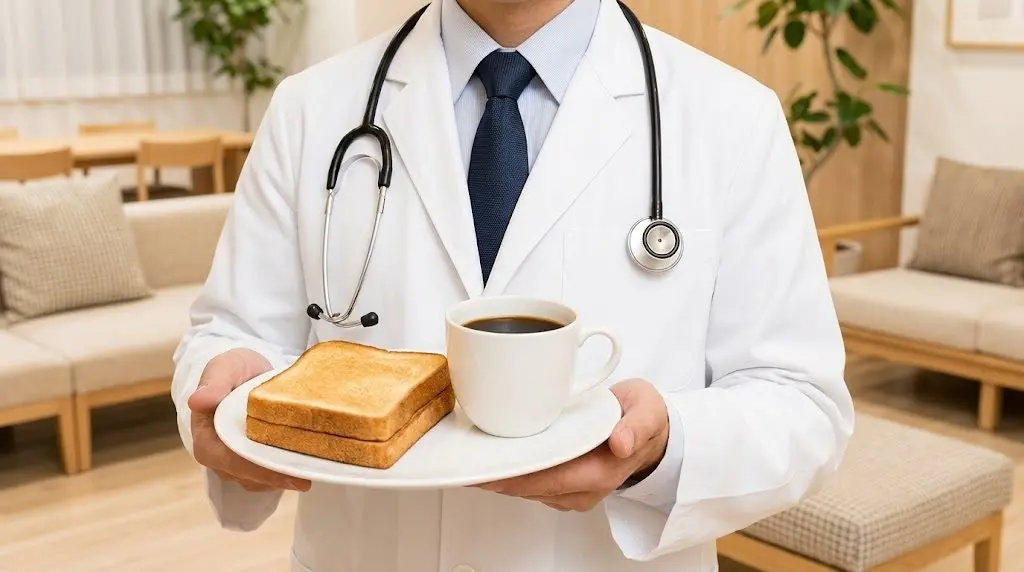
The latest medical guidelines confirm that split-dose bowel preparation — drinking the laxative in two separate doses — is the gold standard for achieving the cleanest colon. The good news is that the day before the exam, you no longer have to suffer through a liquid-only diet. Eating low-residue foods such as white toast and steamed eggs not only provides equally good bowel cleanliness, but also significantly improves patient satisfaction and reduces side effects like nausea and vomiting.
Li-Zhu is fifty-eight years old and runs a small beauty salon on a street corner. Three years ago, she had her first colonoscopy, and the bowel preparation process still haunts her to this day. The day before, she could only drink honey water and sports drinks, and she was so hungry that her hands were shaking. That evening, she forced down two liters of laxative solution until she felt nauseated, and she ended up vomiting most of it in the bathroom. The next day during the examination, the doctor said her bowel still wasn't clean enough — several segments were too obscured to see clearly — and recommended she come back in six months for a repeat procedure.
When she heard that, she broke down: "Come back in six months and do it again? Then I'm not doing it."
She avoided it for three years. This year, her fecal occult blood test came back positive again, and her family urged her to get a colonoscopy. Her first reaction wasn't worry about the result — it was fear of the preparation process. "You have no idea how awful it is. I'd rather not know the results."
But avoidance is no solution, and she knew it deep down. Walking into the clinic full of resistance, the first thing she said was: "Doctor, is there a less painful way to prepare? If it's going to be like last time, I really can't do it."
In fact, medicine has made significant advances in recent years. The old protocol requiring patients to consume only clear liquids the entire day before the exam has, according to the latest authoritative guidelines, been replaced by a more humane approach. The new preparation method allows you to eat solid food, so you don't have to starve until your hands tremble, and research has confirmed that the bowel cleanliness achieved is just as good as — or even better than — the traditional method.
However, one prerequisite remains unchanged: no matter what preparation method is used, the bowel must be thoroughly cleaned. The inner lining of the colon is covered with folds, and even a tiny bit of residue could be covering a polyp that is actively growing. When the doctor inserts the scope, if the field of view is obstructed, it's like trying to find your way through fog — critical lesions can easily be missed.
Why Does the Report Have a Red Flag (The Importance of Bowel Cleanliness)
To understand why doctors care so much about whether you've "cleaned out" properly, and why they set the standards so strictly for this purpose, we can use two everyday examples to illustrate. This isn't about making things difficult for patients — it's about saving lives.
Mud on the Windshield
Try to imagine you're driving in heavy rain, and the windshield is covered in muddy water. At this point, no matter how good your eyesight is (no matter how skilled the doctor is) or how bright the headlights are (no matter how high the endoscope's resolution is), you still can't see the road clearly.
Inadequate bowel preparation is like that mud on the windshield. As long as there's a patch of dirt blocking the view, we cannot be certain what lies beneath. Perhaps the surface underneath is smooth and uneventful, but perhaps a tiny precancerous lesion is hiding right there.
To ensure driving safety, we must wipe the glass completely clean, leaving no blind spots whatsoever.
A Treasure Hunt in a Ball Pit
The inner lining of the colon has many folds, much like a large ball pit. The doctor's task is to find certain specific coins (polyps) within this ball pit.
If the ball pit is filled with miscellaneous items (fecal residue), you have to rummage and search to see the bottom — it's not only time-consuming but also very easy to miss things. But if we clear out all the clutter from the ball pit, leaving only a flat bottom, that coin will be extremely conspicuous and can be spotted immediately. The purpose of bowel preparation is to completely clear away all the clutter, leaving every lesion with nowhere to hide.
What Does the Research Say?
Regarding how to keep patients comfortable while giving doctors a clear view, the American and European gastroenterology societies have recently issued important consensus statements and guidelines. These data have fundamentally changed our previous understanding.
Split-Dose Laxative: This Is the Standard Answer
In the past, many people were accustomed to drinking all of their laxative solution in one sitting the night before the exam, thinking this would let them sleep peacefully. But research has found that this "drink it all at once" approach actually doesn't work well.
According to the latest recommendations from the American Gastroenterological Association (AGA) and the US Multi-Society Task Force on Colorectal Cancer, "split-dose" administration is the standard practice that all patients should follow [1].
What is split-dose administration? Simply put, it means dividing the laxative into two halves.
The first half: Drink it the evening before the examination.
The second half: Drink it the morning of the examination day.
This recommendation is very specific: the second dose of laxative should be started 4 to 6 hours before the examination begins, and must be completed at least 2 hours before the examination [1].
Why go through all this trouble? Because our body continuously produces bile and mucus. If you finish all the laxative the night before, after an entire night of sleep, these secretions accumulate again in the right side of the colon (which is the starting point of the examination).
By the time the morning examination comes around, that area is often dirty again. Drinking the split dose allows the second dose of laxative to flush away these newly produced fluids, keeping the bowel at its cleanest state at the time of examination.
The European Society of Gastrointestinal Endoscopy (ESGE) also strongly supports this point, stating that split-dose administration should apply to everyone scheduled for a colonoscopy [4]. If the examination is scheduled for the afternoon, the entire laxative can even be taken in split doses on the same morning (same-day regimen), with equally good results. However, for morning examinations, split-dose is definitely cleaner than drinking everything in one sitting that same morning [1].
A Dietary Revolution: No More Surviving on Sugar Water
This is perhaps the change that makes people happiest. In the past, patients were required to consume only "clear liquids" the entire day before the exam — meaning completely residue-free liquids such as sports drinks, filtered juice, and sugar water. This left many people with trembling hands from hunger, low blood sugar, and nausea from fasting too long.
Now, multiple randomized controlled trials and meta-analyses tell us: a low-residue diet provides the same bowel cleanliness as a clear liquid diet [2].
Research shows that for average-risk patients, eating low-residue foods the day before the exam (such as white rice, white noodles, skinless chicken, steamed eggs) achieves bowel cleanliness identical to that of consuming only liquids. Moreover, patient satisfaction significantly improved — they weren't as hungry, felt less nauseous, and were more willing to comply with the entire bowel preparation process [2].
This isn't something we're just casually claiming — both American and European data support this approach [2][4]. As long as you are a patient who can move around freely at home and has a lower risk of bowel preparation failure, eating something the day before is perfectly fine.
What About Difficult Cases?
Although a low-residue diet works for most people, there is a group that needs special attention.
If your constitution is somewhat unique — for example, if you have severe constipation, your last exam showed inadequate cleansing, or you've been on certain long-term medications (such as opioid painkillers or psychiatric medications) — then you belong to the "high-risk group."
For these individuals, research recommends that you can't rely solely on the day-before effort. You need to start strict dietary control 2 to 3 days in advance, eating only low-fiber foods, and your doctor may need to increase the laxative dose or add medications that promote bowel motility [1][3].
The Power of Patient Education
The final key factor affecting cleanliness is whether you "know how to drink the prep properly."
Research has found that a printed instruction sheet full of text is often not enough by itself. If the hospital can provide telephone consultations, app-based navigation, or visual explanations with illustrations, the success rate of bowel cleansing increases significantly [1][6]. Many times when patients don't achieve adequate cleansing, it's not because of a physical problem — it's because they got the mixing ratio of the solution wrong, or the timing of their fluid intake was off.
Do I Need Further Action?
Everyone's physical condition is different, and the appropriate bowel preparation strategy varies accordingly. Please refer to the following table to see which category applies to you:
Your Situation | Dietary Recommendation | Laxative Strategy | Doctor's Advice
General population — regular bowel habits, no special conditions | Day before exam: Low-residue diet allowed (white toast, steamed eggs, skinless fish). Switch to liquids after lunch. | Split-dose: Half the night before, half the morning of. (Applies to morning exams) | This is the gold standard — least hunger and cleanest results.
Afternoon examination | Day before exam: Low-residue diet allowed. No food after dinner. | Same-day: Take the laxative in split doses the morning of the exam day. | For afternoon exams, this is an acceptable alternative [1][4].
The constipation group — those who only have a bowel movement every 3-4 days | Start 2-3 days before exam: Strict low-fiber diet. Avoid vegetables, fruits, nuts, and milk. | Enhanced split-dose: May need to start stool softeners earlier or increase laxative dose. | Be sure to inform your doctor about your constipation when picking up your prep [3].
Previous bowel prep failure — told last time the bowel wasn't clean | Start 2-3 days before exam: Strict dietary control. Switch to full liquid diet the day before. | Rescue protocol: Use higher-dose laxative or a more intensive drinking schedule. | Don't be discouraged — with earlier preparation this time, you can succeed [3].
Are There Any Side Effects or Risks?
Although the new bowel preparation methods are more humane, drinking laxative solution is still a challenge for the body.
First, there is dehydration and electrolyte imbalance. Laxatives work by drawing water from the body into the intestines to help flush out stool. This means the body temporarily loses a significant amount of fluid.
If you already have poor kidney function or heart failure, certain types of laxatives (particularly hyperosmotic sodium phosphate preparations) can cause dangerous electrolyte disturbances and may even damage the kidneys [5]. The European Society of Gastrointestinal Endoscopy explicitly recommends that these patients avoid sodium phosphate products and instead use polyethylene glycol (PEG)-based laxatives, which are safer [5].
Second, there is bloating and nausea. Drinking a large volume of liquid in a short period, combined with the taste of the solution itself, makes many people want to vomit. Research indicates that adding an appropriate amount of simethicone (an anti-gas agent) to the preparation solution can effectively reduce bubbles in the intestines, not only making you feel more comfortable but also helping the doctor see more clearly (because bubbles can also obstruct the view) [1][4].
Additionally, for those whose bowel preparation is inadequate, you should never think "let's just skip it this time." Because when the field of view is obstructed, the accuracy of the examination is significantly compromised. In such cases, a same-day rescue attempt may be needed (additional enema or more laxative), or a new colonoscopy may need to be scheduled within a short time frame [3] — which is actually more of an ordeal overall.
What Does Your Doctor Recommend?
Combining all the research evidence and clinical experience, to help make your colonoscopy as smooth and accurate as possible, I recommend following these steps:
1. Adjust Your Menu
The day before the exam, feel free to eat a low-residue breakfast and lunch.
You can eat: white rice, white rice porridge (without added sweet potato or vegetables), white toast, plain steamed buns, steamed eggs, skinless and sinew-free chicken breast, fish, and tofu.
Do not eat: whole wheat bread, brown rice, oats, all vegetables, all fruits, milk, cheese, or nuts.
Remember, the goal is "easy to digest, no fiber." The less residue the food leaves in the intestines, the better.
2. Calculate Your Timing for Drinking the Prep
Take out your examination appointment slip and note the exact examination time.
Set an alarm: If your exam is at 9 AM, you'll need to wake up around 4 to 5 AM to drink the second dose of the solution. It sounds painful, but those two hours of effort buy you years of peace of mind.
Last sip of water: You must stop drinking anything at least 2 hours before the examination. This is for anesthesia safety — to prevent water in the stomach from being aspirated into the lungs during sedation.
3. Drink Plenty of Water and Move Around
After drinking the laxative, supplement with plenty of plain water. The laxative solution is just the "cleaning agent" — you need a large volume of "clean water" to do the flushing. After drinking the prep, don't just lie in bed scrolling through your phone. Get up and walk around the house, do some light chores — this helps stimulate bowel movement and makes elimination smoother.
4. Speak Up About Special Circumstances
If you have heart disease, kidney disease, or are currently taking anticoagulants, blood sugar-lowering medications (including the increasingly popular GLP-1 receptor agonists), you must inform your doctor during your appointment. The doctor will select the safest type of laxative based on your health condition (such as a polyethylene glycol PEG-based product) and adjust how you take your chronic disease medications [4][5].
Common Misconceptions Clarified
Myth 1: You absolutely cannot eat anything the day before the exam — not even water?
The truth: That's an outdated concept. We now encourage a "low-residue diet." This does not affect the examination at all. In fact, because you're not as hungry, you'll have more energy to comply with the drinking protocol. As for water, you are actually required to drink plenty of water up until 2 hours before the exam — otherwise the laxative can't push the stool through.
Myth 2: The earlier you finish drinking the laxative, the better — finishing it all the night before is the safest approach?
The truth: It's actually the opposite. If you finish too early, bile flows down during the night, and by morning the bowel is dirty again. "Split-dose" or "two-stage" drinking is the cleanest method. Having the second dose of laxative take effect in the hours just before the exam is like washing your face right before going out — it leaves you at your freshest and cleanest.
Myth 3: The laxative solution tastes terrible — can I mix it with juice or tea?
The truth: It depends on the type of solution, but most can be combined with residue-free beverages. However, you absolutely must not mix it with red or purple drinks (such as grape juice or cranberry juice), because that color remaining in the intestines can be mistaken by the doctor for bleeding, leading to a misdiagnosis. It's best to stick with plain cold water or light-colored sports drinks.
Conclusion
When facing a colonoscopy, we no longer need to suffer like we did in the past.
Keep the concepts from this article in mind: "split-dose drinking" is the key, and "low-residue eating" is perfectly fine. These two changes can keep you from being desperately hungry and ensure that the doctor can see your bowel clearly and thoroughly.
If you happen to have an examination appointment slip handy, why not take it out right now and cross-reference it with the preparation instructions. If you're still confused, or unsure about how to adjust your medications, please call the patient education office to ask. Doing the preparation right means we can get it done in one go and see the road to health more clearly.
Key Takeaways
Split-dose laxative is the gold standard for bowel cleansing: Drinking half the night before and half the morning of the exam keeps the bowel at its cleanest state at the time of examination.
Low-residue diet has replaced the full liquid-only diet: The day before the exam, you can eat easily digestible foods like white toast and steamed eggs, which improves patient satisfaction while achieving equivalent bowel cleanliness.
Special populations need to prepare earlier: Those with severe constipation or previous bowel prep failure should start dietary control 2-3 days in advance and discuss enhanced preparation plans with their physician.